Tepid Sponging Procedure Guide
Last Updated Aug. 14, 2025, 2:43 p.m.
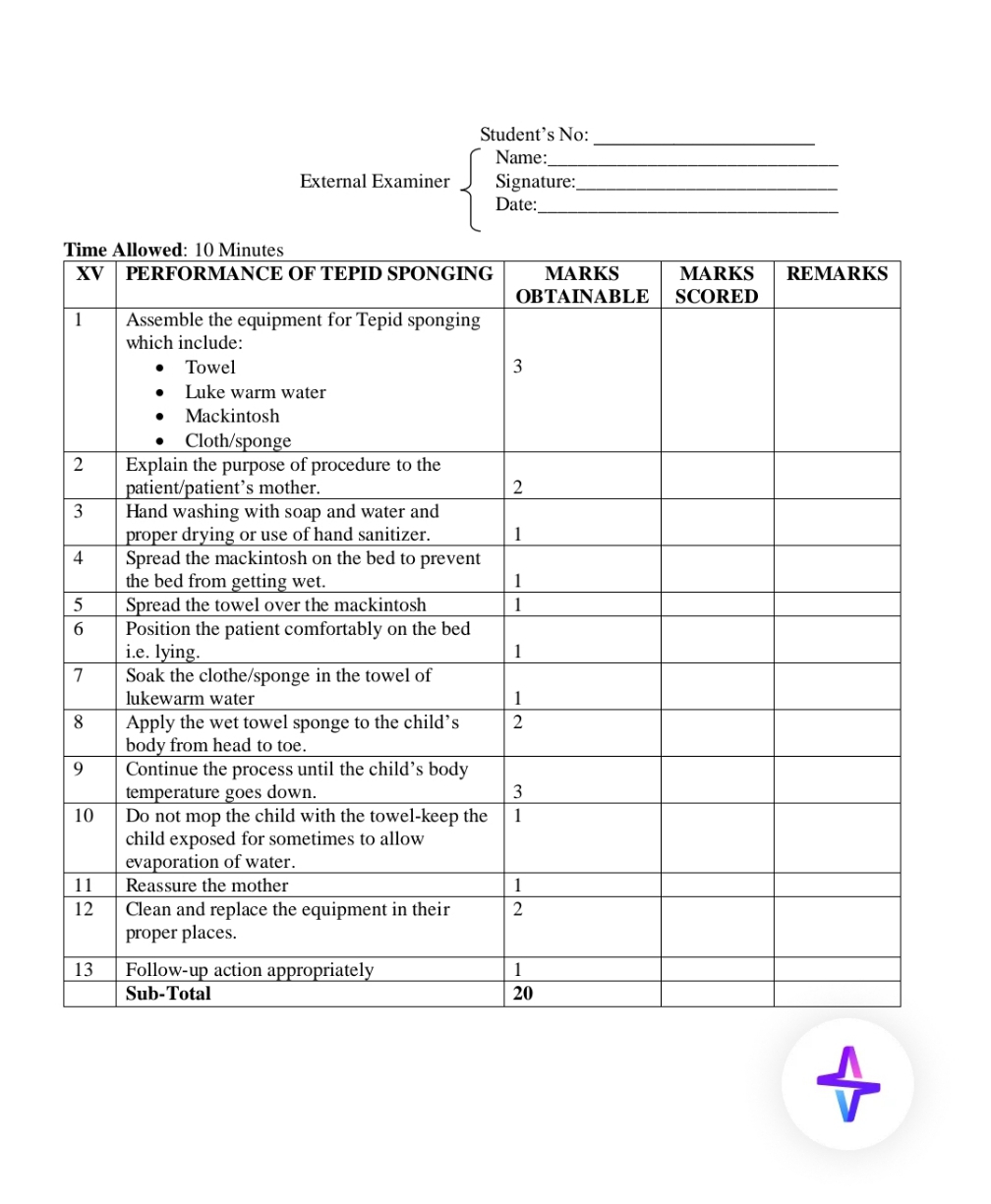
Tepid sponging is a safe and effective way to help reduce fever and make a patient more comfortable. This guide outlines each step clearly, so healthcare providers can carry it out confidently while ensuring comfort and safety.
1. Assemble the Equipment
Before starting, ensure you have all the necessary items:
- Towels: At least two soft towels – one for sponging, another for drying or covering.
- Lukewarm Water: Between 29.4°C to 32.2°C (85°F to 90°F). Avoid cold water or ice.
- Mackintosh (Waterproof Sheet): To keep bed linen dry.
- Cloth/Sponge: Clean, soft, and gentle to avoid skin irritation.
2. Explain the Procedure
Speak to the patient (or parent/guardian) in simple, reassuring language. For example: "We’re going to use lukewarm water to help bring down the fever and make you feel better."
3. Hand Hygiene
Wash your hands thoroughly with soap and water for at least 20 seconds or use an alcohol-based sanitizer (minimum 60% alcohol). Dry properly before starting.
4. Prepare the Bed
Place the mackintosh on the bed to protect the sheets, then spread a dry towel over it for added absorption and comfort.
5. Position the Patient
Lay the patient comfortably, usually on their back. Adjust the position if needed for better access during sponging.
6. Prepare the Sponge
Dip a clean cloth or sponge into lukewarm water and wring it out until damp, not dripping.
7. Apply the Sponge
Start from the head and work down to the toes, focusing on areas like the forehead, neck, armpits, and groin. Use gentle strokes to promote cooling.
8. Monitor Temperature
Check temperature every 10–15 minutes. Continue until the fever drops below 38°C (100.4°F). Replace water if it cools down.
9. Let the Water Evaporate
Do not dry the patient immediately. Let the water evaporate naturally to aid cooling. If shivering occurs, gently pat dry.
10. Reassure the Parent
Update the mother or guardian during and after the procedure. Address concerns and explain the next steps in care.
11. Clean and Store Equipment
Wash and disinfect all used items. Store them in a clean, dry place for future use.
12. Follow-Up
Monitor the child’s temperature and condition after the procedure. Document the details and advise parents on fever management at home.
Conclusion:
When done correctly, tepid sponging is an effective and gentle way to manage fever. Clear communication, proper technique, and compassion are key to achieving the best outcomes.