How to Perform a Urine Test for Albumin Using Albustix
Last Updated July 31, 2025, 9:29 a.m.
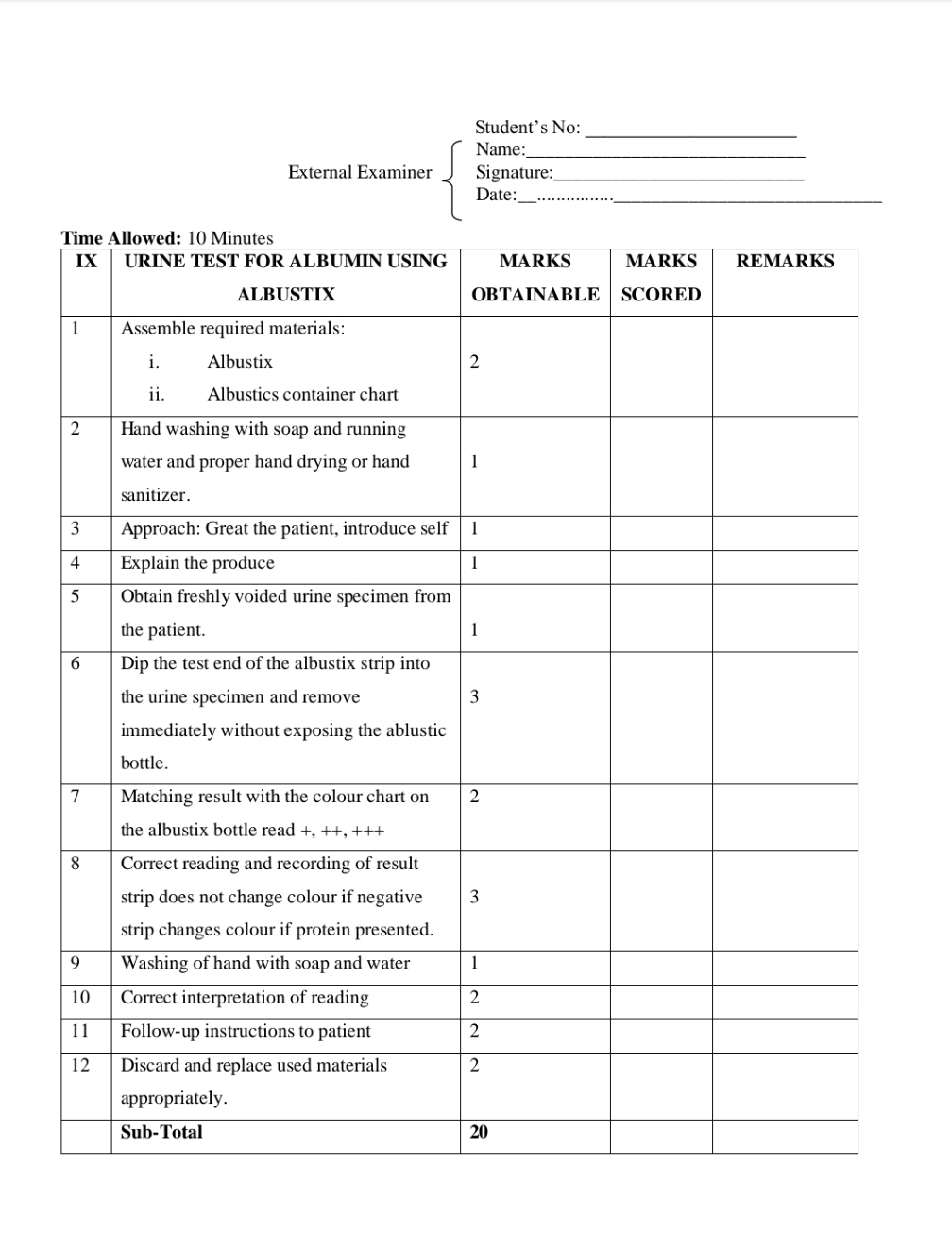
These are straightforward and practical procedures for Community Health Workers on how to effectively carry out each step in the urine test for albumin using Albustix.
1. Gather Your Materials
What to do: Collect everything you need before starting.
- Albustix test strip
- Albustix container chart for color comparison
- Clean gloves
- Clean container for urine specimen
Why it matters: Being prepared ensures a smooth and hygienic testing process.
2. Wash Your Hands with Soap and Water, Then Dry Properly
What to do: Wash your hands thoroughly for at least 20 seconds, then dry with a clean towel or air dryer.
Why it matters: Prevents infections and maintains hygiene for both you and the patient.
3. Approach the Patient: Greet, Introduce Yourself, and Explain Your Role
What to do: Politely greet the patient, share your name, and explain the purpose of the visit.
Example: “Good morning! I’m Grace, a community health worker, and I’m here to help check your urine today to assess your health.”
Why it matters: Builds trust and helps the patient feel at ease.
4. Explain the Procedure
What to do: Briefly describe what will happen during the test.
Example: “I’ll be collecting a small sample of your urine and using a test strip to check for protein.”
Why it matters: Informs the patient and encourages cooperation.
5. Collect a Fresh Urine Specimen from the Patient
What to do: Provide a clean, labeled container and request a fresh sample.
Tips: Ensure privacy and explain how to collect a midstream sample if needed.
Why it matters: Fresh samples give the most accurate results.
6. Dip the Test End of the Albustix Strip into the Urine
What to do:
- Wear gloves.
- Dip only the test end into the urine briefly (about 1 second).
- Avoid touching the container or dipping the whole bottle.
Why it matters: Prevents contamination and ensures accurate reaction.
7. Match the Result with the Color Chart
What to do: Hold the strip flat, wait 30–60 seconds, then compare it to the Albustix color chart.
Readings: Negative (no color change), Trace, +, ++, +++
Why it matters: This shows the level of albumin (protein) present in the urine.
8. Correctly Read and Record the Result
What to do: Record the protein level and time of the test immediately.
Why it matters: Accurate documentation supports good clinical decision-making.
9. Wash Your Hands Again
What to do: Dispose of gloves and materials, then wash your hands thoroughly.
Why it matters: Maintains hygiene and prevents cross-contamination.
10. Correctly Interpret the Reading
What to do:
- Negative/Trace: Usually normal
- + or more: May indicate kidney issues or infection
Why it matters: Helps decide if a referral or further care is needed.
11. Follow-Up Instructions for the Patient
What to do: Explain the result and what steps the patient should take.
Example: “There’s a small amount of protein in your urine. It’s a good idea to visit the clinic for a further check-up.”
Why it matters: Supports early treatment and better outcomes.
12. Properly Discard and Replace Used Materials
What to do:
- Dispose of test strips, gloves, and containers in medical waste bins.
- Clean and replace reusable tools properly.
Why it matters: Prevents environmental contamination and keeps everyone safe.
Total: 20 Marks
A well-conducted test reflects professionalism and improves patient care.
Community Health our concern