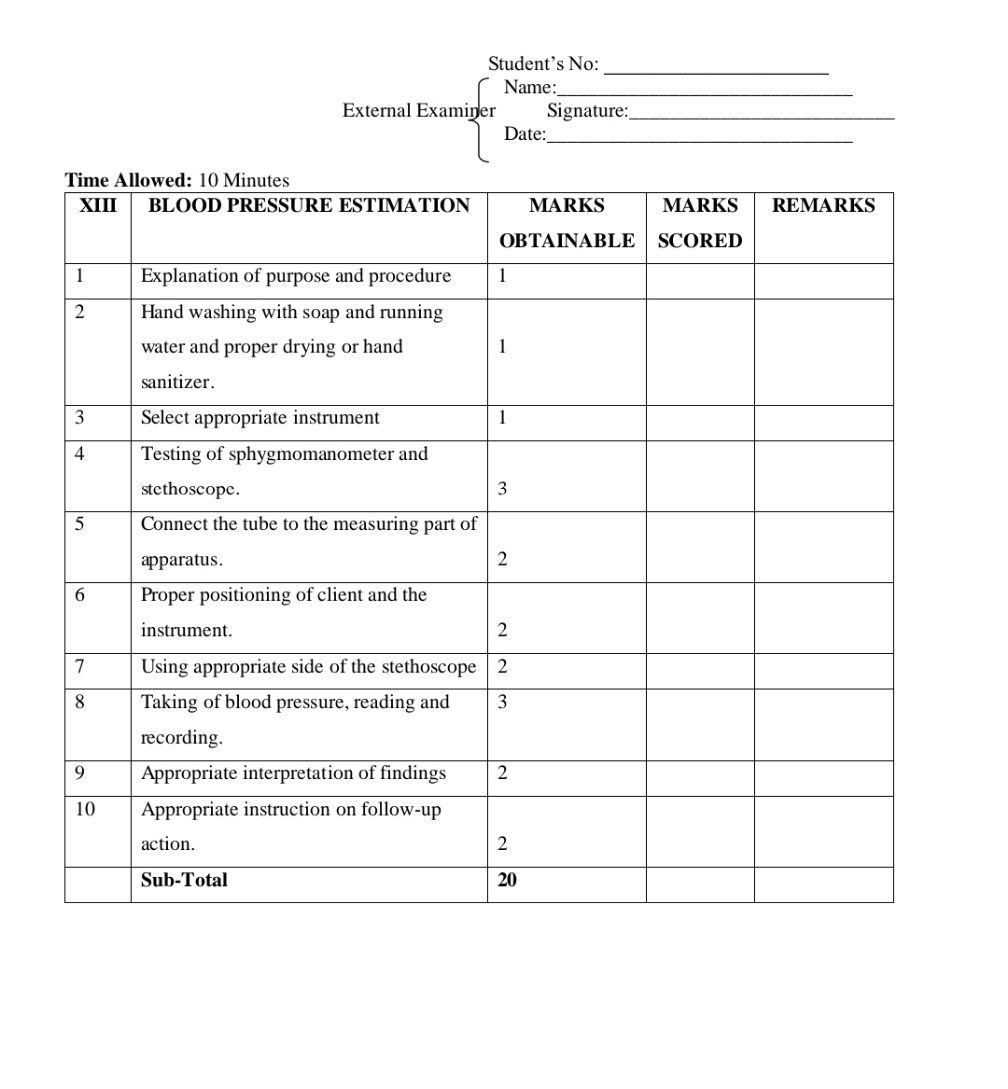
Before you start — quick checklist
- Wash hands or use sanitizer Essential
- Choose the correct cuff size Accuracy
- Check cuff, tubing, and stethoscope Ready
Step 1 — Explain what you're doing
Speak to the person before you touch them. A short, friendly introduction calms nerves and builds trust. Try:
"Hello — my name is [Your Name]. I'm going to take your blood pressure now. It's quick and helps us check how your heart is working."
Step 2 — Wash your hands
Clean hands protect your patient and you. Use soap and water when available; otherwise use hand sanitizer. Do this every time.
Step 3 — Choose the right equipment
Pick a cuff that fits the person's upper arm. A cuff that's too small can give falsely high readings; too large can give falsely low readings. If in doubt, use the next size up rather than down.
Step 4 — Check your tools
Quickly inspect the cuff, tubing, and gauge for damage. Put the stethoscope earpieces in and tap the diaphragm so you know it's working. A short equipment check prevents wasted attempts.
Step 5 — Connect everything properly
Ensure the cuff tube is securely attached to the pump and gauge. A loose connection will let air escape and give an inaccurate result.
Step 6 — Position the person correctly
Have the person sit comfortably with feet flat on the floor and back supported. The arm should rest on a table at heart level. Ask them to roll up the sleeve so the cuff sits on bare skin about 2–3 cm above the elbow crease. Wrap the cuff snugly — not too tight, not loose.
Step 7 — Find the right spot with your stethoscope
Place the stethoscope diaphragm in the antecubital fossa (the crease of the elbow) over the brachial artery — usually just medial to the biceps tendon. Hold it gently in place.
Step 8 — Take the measurement
- Close the valve on the pump and inflate the cuff while watching the gauge.
- Inflate to about 20–30 mmHg above the point where the pulse disappeared or roughly 30 mmHg above the expected systolic if known.
- Open the valve slowly to deflate at about 2–3 mmHg per second while listening carefully.
- The first clear "thump" you hear is the systolic pressure — record it.
- Keep letting air out; when the sounds fade and disappear, that's the diastolic pressure — record it.
- Open the valve fully to release remaining air and remove the cuff.
Step 9 — Understand what the numbers mean
A common reference is that around 120/80 mmHg is considered normal for many adults, but interpretation depends on age, health history, and local guidelines. If the reading is unusually high or low, consider rechecking after a few minutes or consulting a clinician.
Step 10 — Tell the person what's next
Share the numbers clearly and simply. For example:
"Your blood pressure is 135 over 85. That's a bit high today. Consider checking again in a few weeks and talk with your nurse or doctor."
Offer practical advice: lifestyle tips for long-term control, remind them to follow up, or advise urgent care if symptomatic (severe headache, chest pain, shortness of breath).
Final tips and troubleshooting
- If readings seem inconsistent, wait 2–3 minutes and repeat on the same arm or the other arm.
- Avoid measuring right after the person has smoked, exercised, or had caffeine when possible.
- Document the arm used and position (sitting/standing) for accurate follow-up comparisons.
Remember: Confidence, cleanliness, and clarity are your best tools in any examination. Practice well and you'll do great!
A well-conducted test reflects professionalism and improves patient care.
Community Health our concern